


Most businesses approach a website redesign with a clear picture of what they want the end result to look like, and a much hazier sense of how to get there. That gap - between the vision and the reality of what a redesign project involves - is where timelines slip, frustration builds, and projects stall.
This guide covers what a website redesign actually involves from start to finish: what happens at each stage, what you will need to contribute as a business, and what to watch for when briefing an agency.
More Than a New Look: What a Website Redesign Covers
A website redesign is not a reskin. The visual design - the new look you are probably imagining - is one part of a broader process that also covers structure, content, performance, SEO, and the technical foundation the site runs on. A redesign done well will address all of these. A redesign done poorly will produce a site that looks better but performs no better, and may perform worse if things like SEO redirects, page speed, or analytics are not handled correctly during the transition.
This is worth establishing upfront, because it explains why a thorough redesign takes longer and involves more moving parts than most businesses initially expect. It is not a cosmetic exercise - it is a rebuild of a business asset, and it deserves to be treated as one.
Discovery: The Stage That Shapes Everything Else
Before any design work begins, a good agency will spend time understanding your business: who you are selling to, what the current site does well and where it falls short, what competitors are doing, and what success looks like for the new site.
This phase produces the strategy that everything else is built on. What pages does the new site need? What is the information architecture? What are the primary conversion goals? Are there existing SEO rankings that need to be protected and carried forward? What platform will the site run on, and how will the CMS work for whoever manages content day to day?
These are not questions that can be answered by looking at a design brief. Discovery is the work that ensures the redesign solves the right problems rather than building a visually improved version of the same underlying issues.
For businesses coming to us after a difficult experience with a previous agency, the discovery phase is usually where we identify what went wrong the first time.
Design: Wireframes First, Visual Second
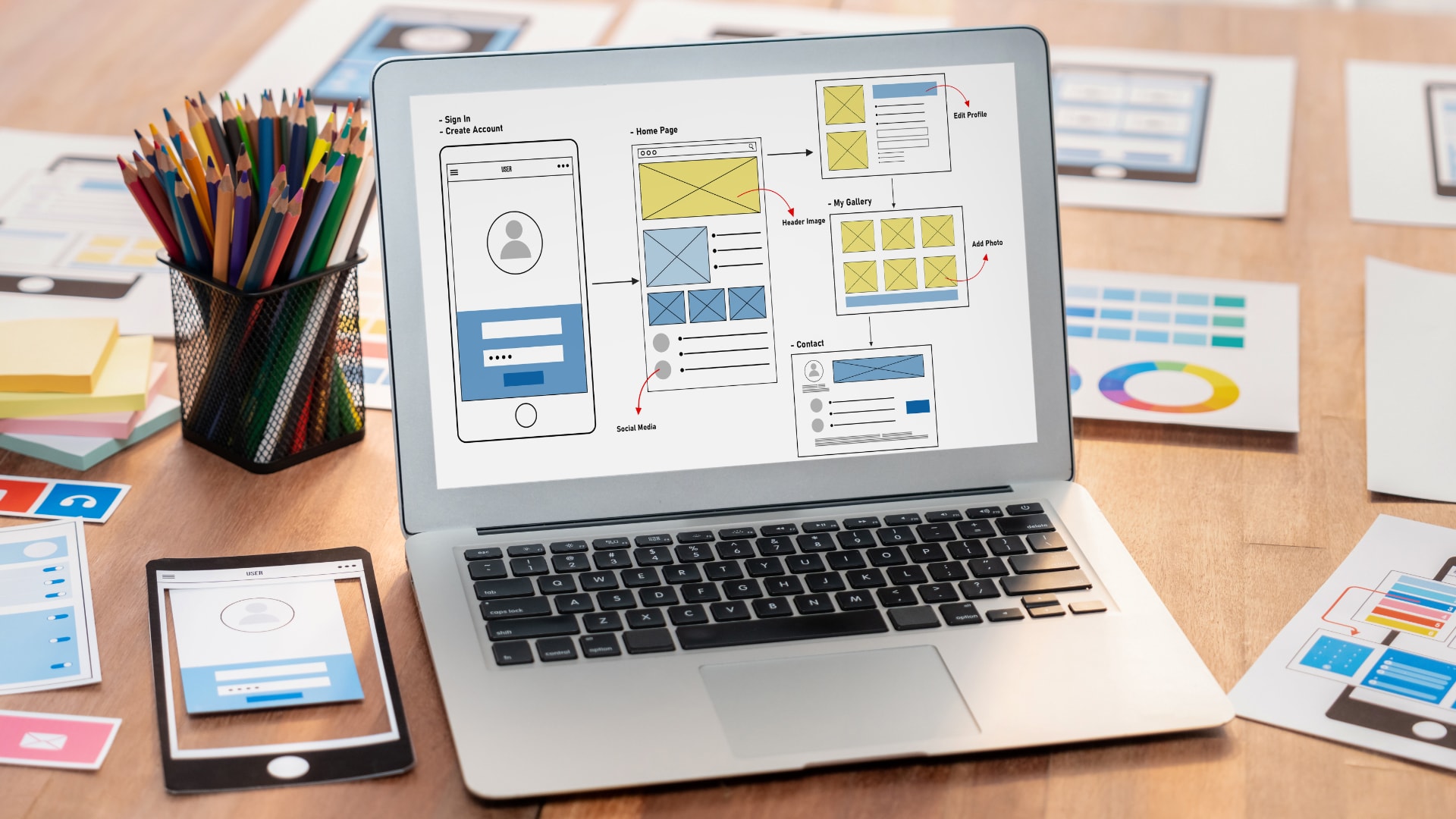
Once strategy is agreed, design begins - but not with colours and logos. The first stage is wireframing: low-fidelity layouts that map out the structure of each page without visual style applied. This is deliberate. It keeps early conversations focused on what needs to be on each page and in what order, rather than getting sidetracked by whether a button should be navy or teal.
Visual design follows once wireframes are confirmed. This is where the brand is applied: typography, colour palette, imagery style, spacing, and the overall feel of the site. We include unlimited revisions at the design stage, so the visual direction is signed off because it is genuinely right, not because a revision allowance has run out. Sign-off here is significant - it is the point at which the visual direction is locked before development begins, and changes after that point are slower and more costly to make.
Content: The Part That Causes the Most Delays
Content is what most businesses underestimate most, and it is consistently the stage responsible for the longest delays in any redesign project.
A new site needs new copy. Not words lifted from the old site and pasted into new templates - properly written content that fits the new structure, speaks to the right audience, and targets the keywords the redesign is meant to rank for. This is either written by the agency (if copywriting is in scope) or provided by the client. Either way, it needs to be planned from day one, not treated as something to sort out once the design is finished.
The same applies to imagery. A site built around stock photography that does not reflect the real business is a common disappointment - and a missed opportunity. If the brief includes real photography, that shoot needs to be commissioned and completed before the site can be fully built out. Waiting for photographs after development has started is one of the most reliable ways to push a launch date back by several weeks.
The practical advice: start preparing content the moment the project is signed off. Brief a photographer at the same time as you brief the agency.
Development: Usually the Longest Phase
With design approved and content ready or in progress, the build begins. Development is typically the longest single phase of a redesign project, and it is the stage where the client spends the most time waiting on the agency rather than the other way around. That is normal - but it should not mean going silent.
Work is carried out on a staging environment: a private, password-protected version of the site that is not yet publicly accessible. This is where the design becomes a working website, built to be responsive across all screen sizes, fast-loading, accessible, integrated with the tools the business uses (analytics, booking systems, CRMs, payment processors), and correctly structured for search engines.
A good agency will share access to the staging site as the build progresses so you can review it in a real browser rather than being presented with a finished product at the end with no opportunity to course-correct. Regular progress updates through this phase are a reasonable expectation, not a favour. If you are weeks into development with no visibility into how things are moving, that is worth raising.
Testing Before Launch
Once development is complete, the site goes through a full round of testing before anything goes live. This covers cross-browser and cross-device rendering, form submissions and third-party integrations, page speed, accessibility, and broken links.
One item that cheaper or less experienced projects regularly skip is redirect mapping: ensuring that every old URL either still exists on the new site or correctly redirects to its new equivalent. Skipping this produces a site that launches without any visible issues but steadily loses its existing Google rankings over the following weeks as old URLs return 404 errors.
Launch and the Post-Launch Period
Launch is not the end of the project. The days immediately after a redesign goes live are when edge cases surface - forms behaving unexpectedly in certain browsers, pages that were indexed under old URLs returning errors, analytics that did not carry over cleanly. A good agency monitors the site closely in the post-launch window and resolves anything that comes up promptly. We include one month of free post-launch support on every project, which means those inevitable small issues are dealt with as part of the work rather than becoming a separate conversation about cost.
Beyond the immediate launch period, the first few weeks are worth using to verify that analytics are tracking correctly, that Google Search Console is not flagging crawl errors, and that search performance is being monitored. Rankings can dip briefly after a redesign even when everything is handled well - this is a recognised pattern and usually resolves within a few weeks. A significant, sustained drop is the signal that something needs to be investigated.
How Long Does a Website Redesign Take?
For a straightforward business website of 10 to 20 pages with a clear decision-making process on the client side, a realistic timeline is 6 to 12 weeks from project kick-off to launch. Larger sites, ecommerce builds, or projects with complex integrations typically take 12 to 20 weeks.
The most common reasons timelines extend are: content that is not ready when development needs it, revisions that reopen decisions already signed off, and feedback cycles that slow down because the right people are not available. None of these are unusual, but they are all avoidable with the right project structure from the start.
If you are working toward a specific deadline - a product launch, a busy season, or a business event - name it at the briefing stage. A good agency will build the timeline back from your date rather than forward from a notional start.
What to Expect from a Good Agency at Each Stage
Regardless of the agency you use, there are a few things worth expecting as standard: a clear brief agreed before any design begins, wireframes presented before visual design, a content plan that accounts for who is writing what and when, a testing protocol before launch, and a defined post-launch support window. If any of these are missing from the proposal you receive, that is worth raising before signing anything.
If you want a sense of what questions to ask before you commit to any agency, our 15 questions guide covers the full picture - including the questions that tend to reveal the most about how an agency works in practice.
For context on what a project of this kind should cost, our UK website cost guide breaks down real 2026 agency pricing across different project types.
Final Thoughts
A website redesign is a significant commitment of time and budget, but it is a well-understood process when managed properly. The businesses that get the best results are typically those that arrive with clear goals, engage seriously during discovery, treat content as their own project responsibility, and choose an agency that can be held accountable for the whole thing rather than just the design layer.
We work with businesses across Cumbria and the UK on redesigns from initial strategy through to launch and ongoing performance. If you have an existing site that is not working as hard as it should, get in touch and we can talk through what a rebuild would involve for your specific situation.
Thinking About a Website Redesign?
We handle the full process - strategy, design, development, content guidance, and launch - so you have one team accountable for the outcome rather than several pointing at each other. Talk to us about your project.
Related Posts


Get in touch - we're happy to chat.