

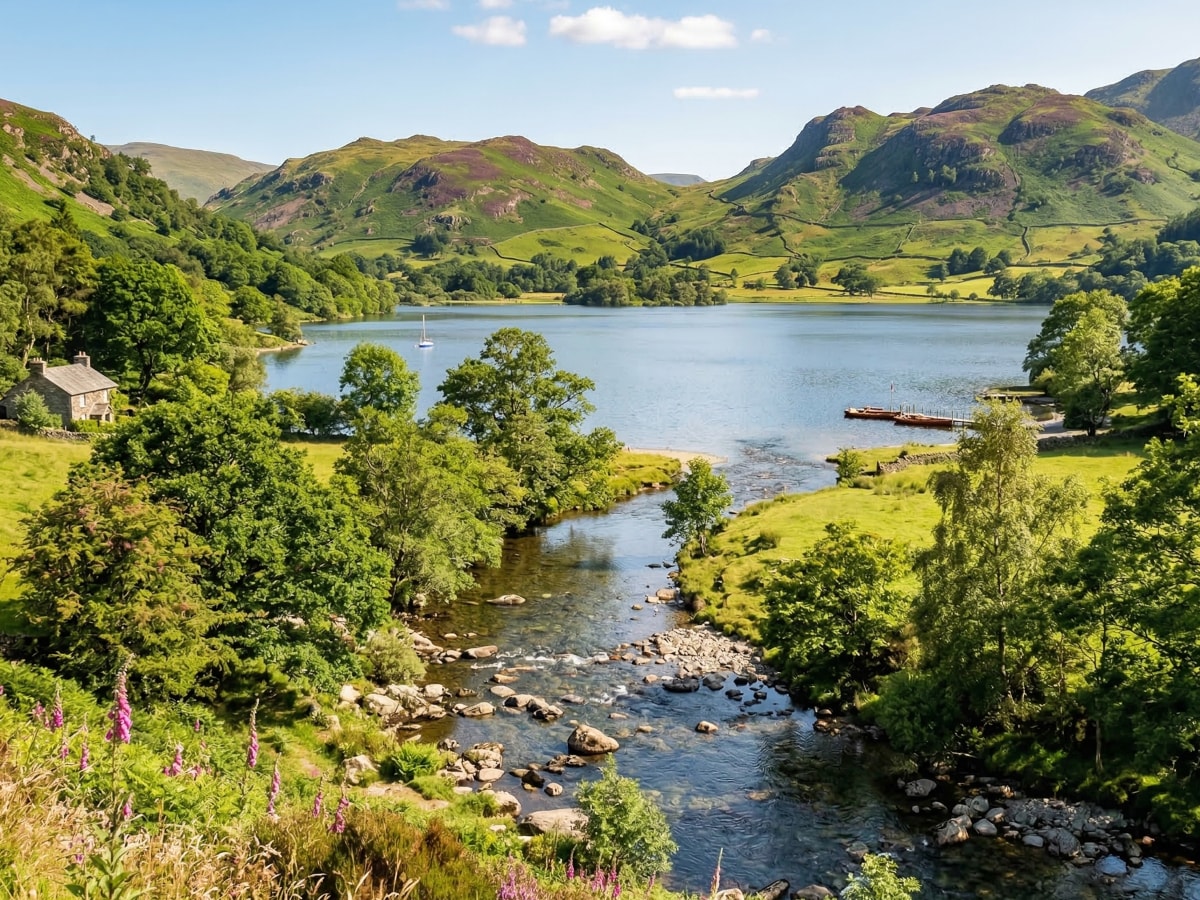
The Lake District is one of the UK's most visited destinations. According to Cumbria Tourism, the region's visitor economy is worth over £3 billion annually, with millions of trips made to the area every year. That volume of potential customers is enormous - but for most accommodation providers, activity businesses, and hospitality operators, only a fraction of those bookings come directly through their own website.
The rest go through Booking.com, Airbnb, Expedia, or other third-party platforms. Those platforms are convenient and visible, but they charge commission on every booking - typically between 15 and 25 per cent. Over a full season, that adds up to a significant share of revenue that goes elsewhere.
The businesses that do well on direct bookings are not necessarily the most expensive or the most well-known. They are usually the ones with a website that gives visitors a reason to book there rather than on a platform. This post covers what that actually looks like in practice.
The Real Cost of Platform Dependency
There is nothing wrong with being listed on Booking.com or Airbnb. Visibility on those platforms is valuable, particularly for new businesses building a reputation. The problem is when a business becomes almost entirely dependent on them.
Every platform booking comes with a commission fee. On a £200 per night B&B stay, that is potentially £40-50 going straight to the platform. Multiply that across a full season and the figure becomes significant. Direct bookings, by contrast, have no transaction cost beyond your own payment processing fees - typically 1-3 per cent.
Beyond the money, direct bookings give you something else: a direct relationship with the guest. You know who they are before they arrive. You can send them pre-arrival information, upsell extras, ask for a review afterwards, and build the kind of loyalty that brings people back year after year. Platform bookings give you none of that.
What Visitors Actually Need Before They Book
A visitor considering a Lake District stay is not just comparing prices. They are trying to build confidence that the place they choose will live up to what they are imagining. That confidence comes from specific signals on your website.
Real photography of the actual property Professional photos of your rooms, outdoor spaces, views, and communal areas do more to convert a visitor than any copy. Visitors are imagining themselves there. Generic stock photography or low-quality phone photos immediately create doubt. If your photography does not reflect the quality of your accommodation, it is worth investing in professional shots before anything else.
Genuine reviews displayed prominently Testimonials from previous guests - ideally with names and dates - carry significant weight. Linking to your Google reviews or Tripadvisor profile adds independent credibility. Visitors who can see consistent positive feedback from real guests feel much more confident booking directly.
Clear information about what is nearby Visitors to the Lake District are not just choosing a place to sleep - they are planning an experience. A page or section on your website covering nearby walks, restaurants, attractions, and activities serves two purposes: it helps visitors imagine their trip, and it creates useful content that can rank for local search terms over time.
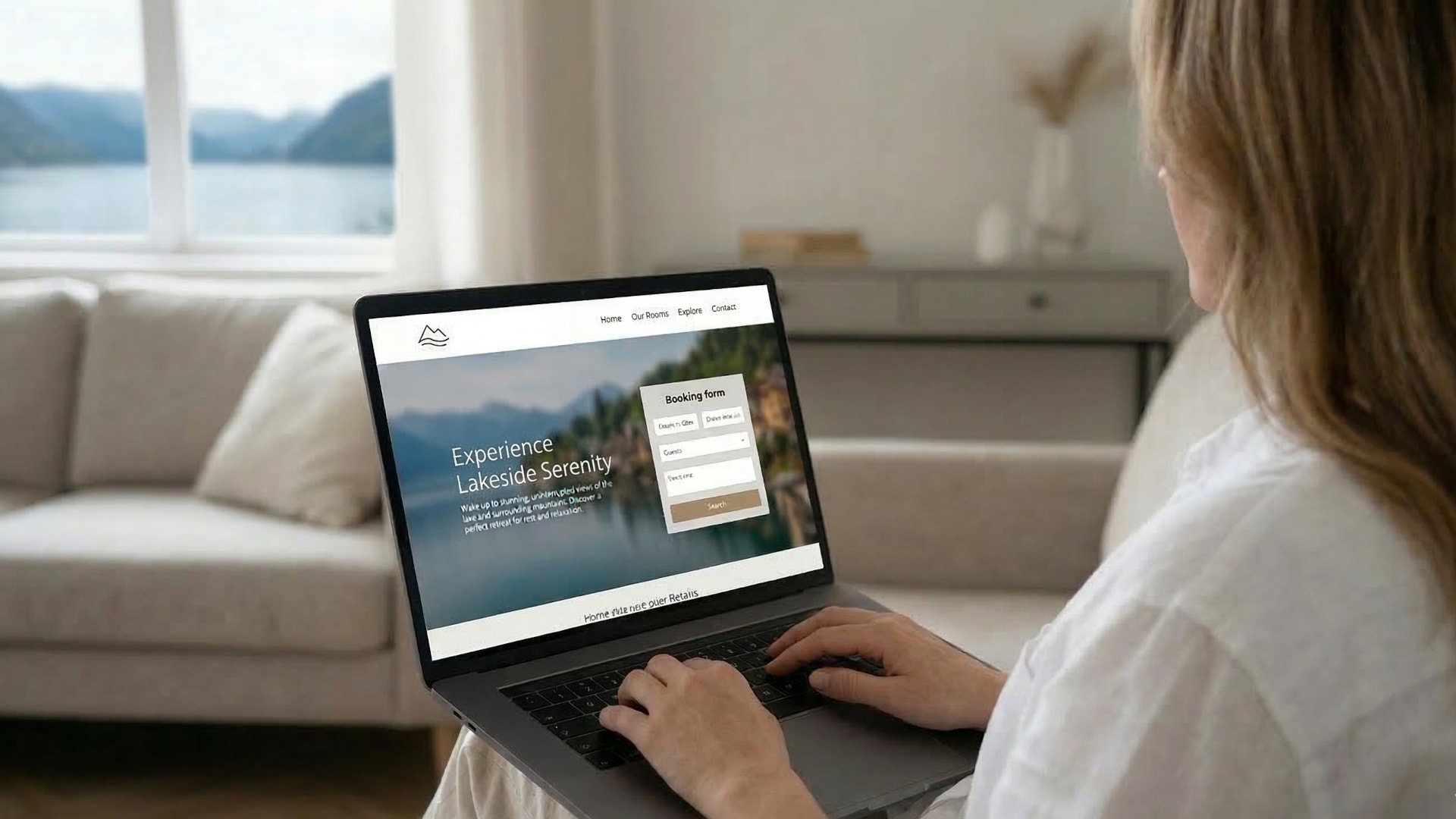
A frictionless booking process If a visitor has to make more than two or three clicks to reach a booking form or check availability, you are losing people. The primary action on every page - whether that is "Check Availability", "Book Now", or "Get a Quote" - should be immediately visible without scrolling.
The Mobile Moment You Cannot Afford to Miss
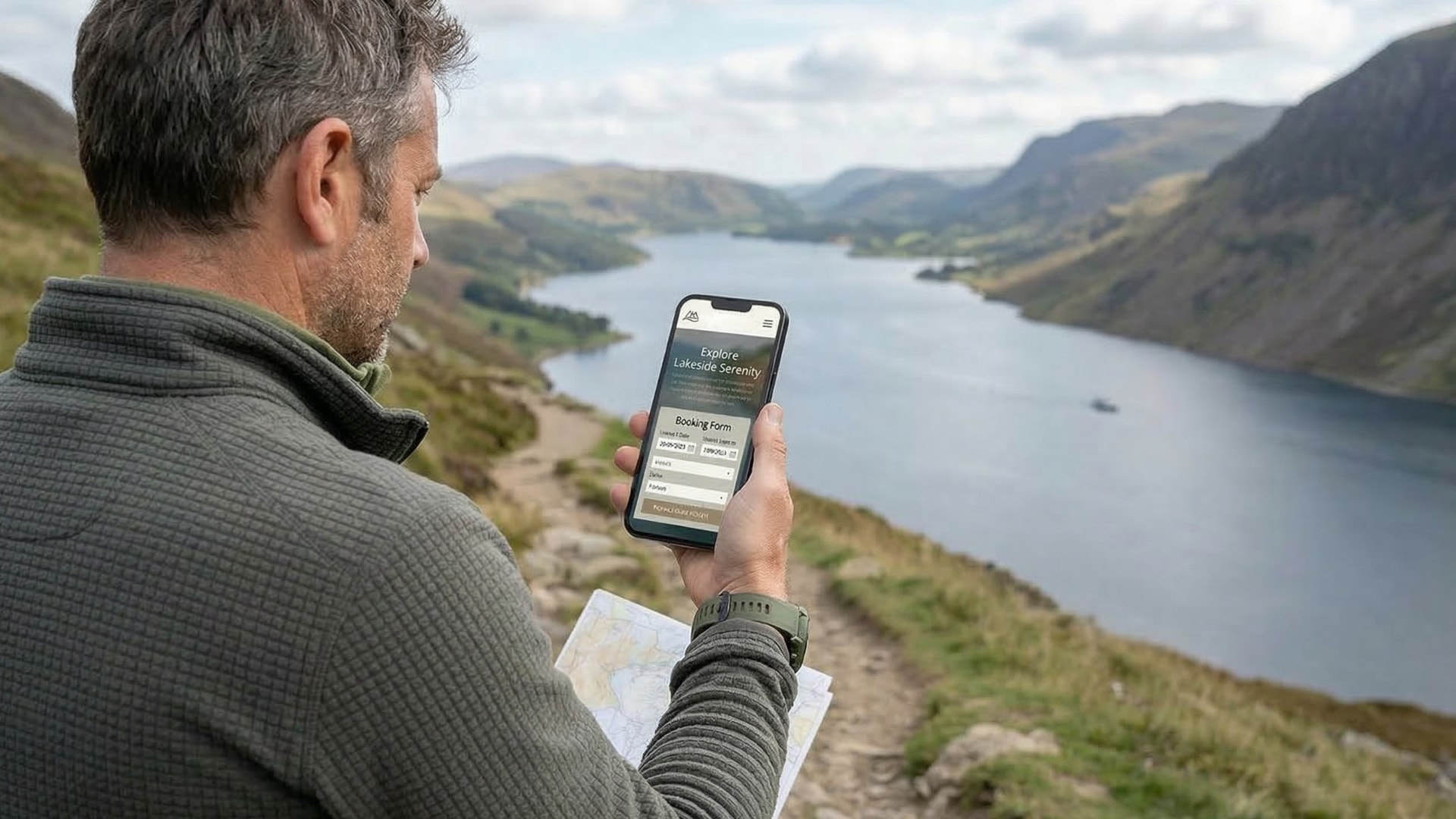
The Lake District creates a specific mobile scenario that most tourism businesses underestimate. A large portion of your potential customers are not researching their trip from a desktop at home - they are already in the region, on a walk or in a café, using a smartphone to find somewhere to eat tonight or somewhere to stay next weekend.
These are high-intent visitors who have already decided they want to be in the area. They are looking for something specific and they will not wait for a slow website to load. If your site takes more than a few seconds to appear, or if the layout does not adapt cleanly to a small screen, they will go to the next result.
For tourism businesses in the Lake District, mobile performance is not a secondary consideration - it is often the difference between a booking and a lost customer. In practice this means:
- Load times under two seconds on a 4G connection
- A visible "Book" or "Check Availability" button above the fold on mobile
- A booking form that is easy to complete on a small screen
- No zoom-required layouts or hover-only navigation elements
- Phone number clickable to dial directly from mobile
Content That Builds Trust and Search Visibility
One of the most underused tools for Lake District tourism businesses is a simple content strategy. A handful of well-written posts covering topics your visitors actually search for can do two things simultaneously: give Google more reasons to surface your site in local searches, and give potential guests more confidence before they book.
The types of content that work well:
- Seasonal guides - "Best walks near Ambleside in autumn", "What to do in the Lake District in January" - these target real search queries and position you as a knowledgeable local
- Practical information posts - parking, getting here from Manchester or Edinburgh, what to pack for a winter visit
- Local recommendations - restaurants, cafés, independent shops you genuinely rate - guests appreciate honest local insight and it creates natural internal linking between pages
- Event-based content - timed around the Ambleside Sports, Grasmere Gingerbread, the Kendal Mountain Festival
None of this needs to be frequent. Two or three genuinely useful posts per season is enough to build up a content library that supports your organic visibility over time.
Your Google Business Profile Is Part of Your Website Strategy
When someone searches "B&B Windermere" or "holiday cottage Coniston", the first results they often see are not websites - they are Google Business Profile listings in the map pack. According to Google's own guidance, a complete and well-maintained Business Profile improves your chances of appearing in these results significantly.
Your GBP and your website need to work together:
- The name, address, and phone number on your website must match your GBP exactly - even small inconsistencies (abbreviated street names, different phone formats) can reduce local search visibility
- Photos on your GBP should be updated regularly - Google weights profiles with recent, high-quality images more favourably
- Responding to reviews on your GBP - both positive and negative - signals active management and builds trust with potential guests reading them
- Your website URL in your GBP should link directly to your homepage or booking page, not a redirect
Getting this relationship right between your website and your GBP is one of the most cost-effective things a Lake District tourism business can do to improve its local search presence.
Where to Focus First
If you are running a tourism or hospitality business in the Lake District and want more direct bookings, the improvements with the highest impact are usually:
- Photography - if your imagery does not reflect the quality of the experience you offer, fix this before anything else
- Booking friction - reduce the number of clicks between landing on your site and completing a booking to as few as possible
- Mobile performance - test your own website on your phone as a visitor would, and fix anything that feels slow or awkward
- Google Business Profile - ensure it is complete, accurate, and linked correctly to your website
- One piece of local content - a single well-written guide to the area around you does more for your SEO than most technical fixes
You do not need to do all of this at once. Fixing your booking process and updating your photography will have an immediate effect. The content strategy and GBP work compound over time.
What a Good Tourism Website Actually Costs You in Lost Bookings
It is worth putting some numbers against this. A typical Lake District B&B charging £120 per night with 60% occupancy across a 30-week season generates around £75,000 in room revenue. If 70% of those bookings come through platforms charging 20% commission, that is roughly £10,500 going straight to Booking.com or Airbnb every year.
A well-built website with a direct booking system - one that converts even a third of those platform bookings to direct - saves around £3,500 annually in commission fees alone. A good website design project typically costs £3,000-5,000. The return on investment, at that rate, comes within the first season.
The businesses that understand this are not just saving money - they are building a guest database, running email campaigns to past visitors, offering loyalty discounts, and generating repeat bookings that cost nothing in commission. The website is not just a marketing tool. It is a direct revenue channel.
If you would like to talk through what your website needs specifically, we are happy to take a look. Get in touch, or see how we approach web design for Lake District businesses and our wider web design services.
Related Posts
Get in touch - we're happy to chat.