

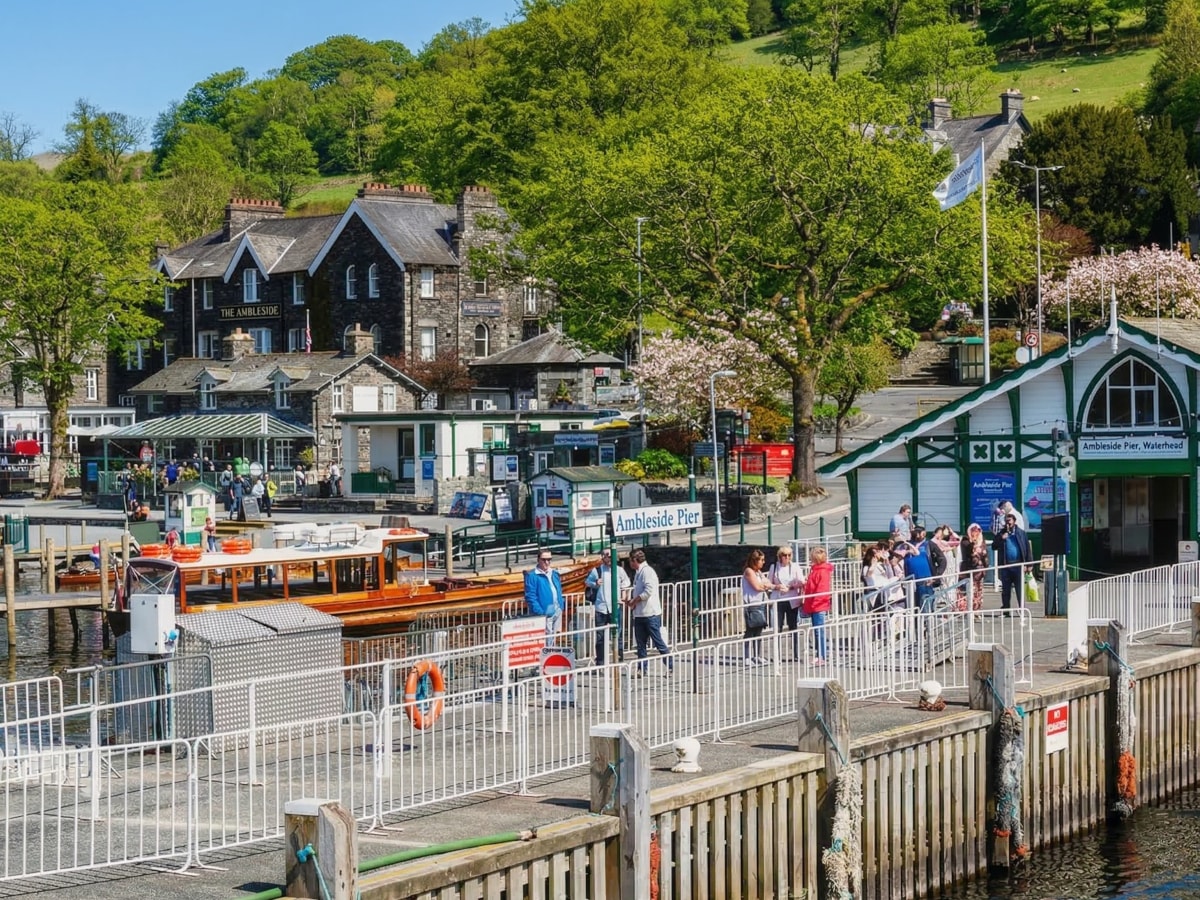
Cumbria is a remarkable place to run a business. According to Cumbria Tourism, the region's visitor economy is worth over £3 billion annually - making it one of the most significant tourism economies outside London. The towns are full of independent traders, and the region has a genuine character that cities can only try to imitate.
But that same distinctiveness creates a challenge. To attract customers - whether local or visiting - a Cumbrian business needs to be found online first. And being found starts with having a website that actually performs.
We are based in Kendal, and we work with businesses across Cumbria regularly. The pattern we see consistently is this: most small businesses have a website, but far fewer have one that is bringing in new customers. It looks fine, but it is not being found on Google. Or it is found, but visitors leave without getting in touch. Or it works on a desktop but falls apart on a phone screen.
This post covers what actually makes the difference for small businesses in Cumbria, and where to focus your attention if you want your website to work harder for you.
Understanding the Cumbrian Business Landscape
Cumbria has one of the most varied business mixes of any region in the UK. Tourism and hospitality are the most visible - accommodation, restaurants, activity providers, outdoor gear retailers - but the region also has a strong base of professional services, trades, construction, health, retail, and creative businesses.
What this means in practice is that web design needs vary considerably. A B&B in Windermere has very different requirements from a plumbing company in Kendal or an independent gift shop in Ambleside. But there are common threads across almost all of them:
- Most Cumbrian businesses rely on local or regional customers
- Seasonal patterns play a significant role for hospitality, tourism, and retail
- The majority of potential customers are searching on mobile devices
- Competition from regional and national businesses is real and growing
One thing links almost every small business in the region: if someone searches online for what you offer and they find a competitor instead, you have almost certainly lost that customer permanently. Most people do not search a second time with a different approach - they click a result, assess what they see in a few seconds, and either make contact or move on.
Why Local Search Is Everything
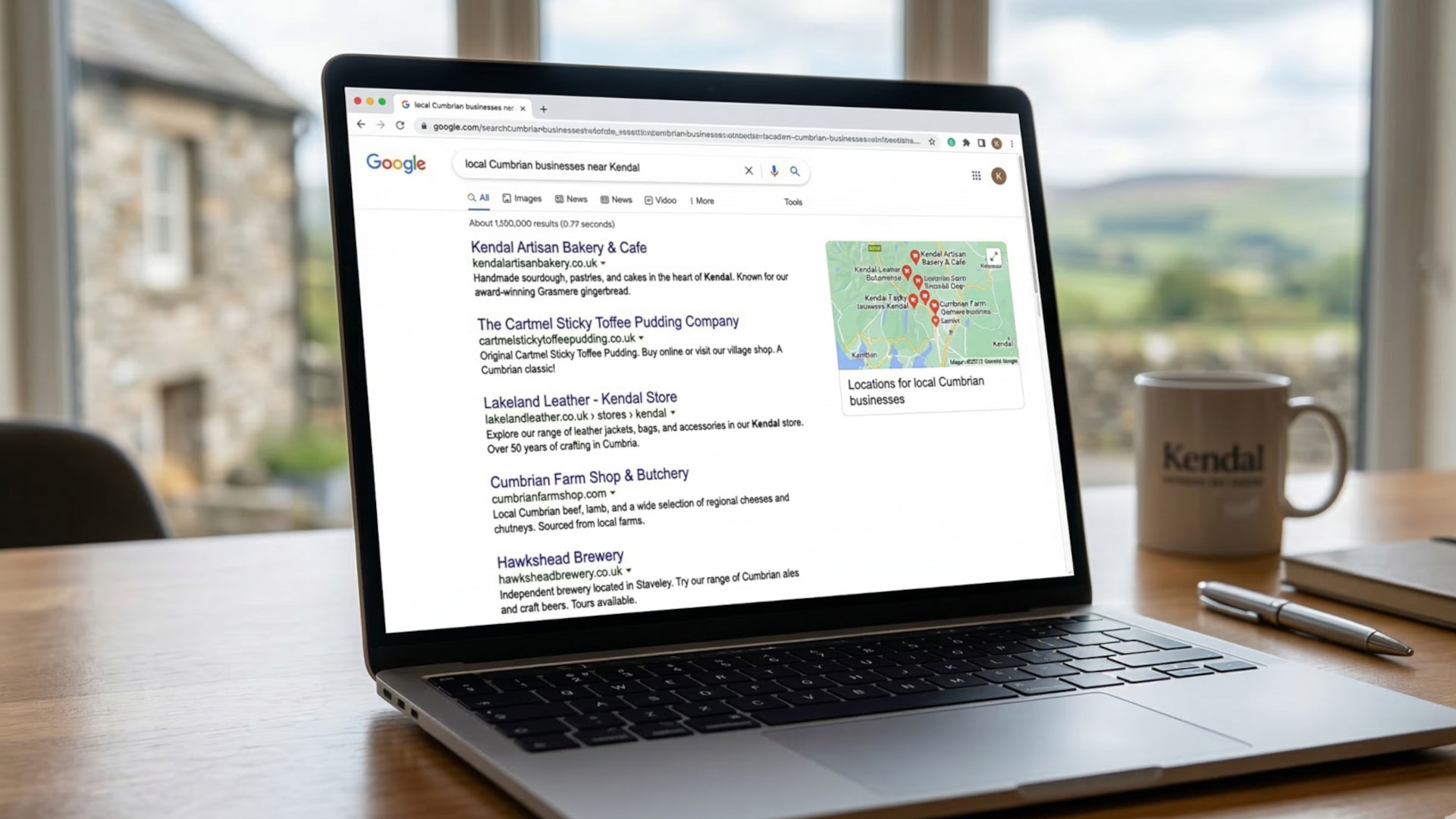
For businesses in Cumbria, local search is not just one aspect of SEO - it is often the primary way new customers arrive. When someone searches "plumber Kendal", "dog friendly cafe Lake District", or "wedding photographer Cumbria", Google serves results it believes are most relevant to that person's location and intent.
Getting into those results requires three things working together:
1. Location-based keywords in your content Your website needs to include the right geographic terms - your town, your region, the areas you serve. A plumber who covers Kendal, Windermere, and Ambleside should have those names woven naturally into their service pages. This is not about cramming keywords in - it is about writing for the person searching from this region.
2. A well-maintained Google Business Profile Your GBP directly influences whether you appear in the local map pack - the map and three listings that sit above standard organic results on most local searches. It needs to be complete, accurate, and updated regularly.
3. A technically sound website Google needs to be able to crawl your pages and understand what you offer. Slow load times, broken links, and poorly structured pages all reduce your chances of appearing in local results.
Many small business websites in Cumbria fail on the first point. They describe their services clearly but never mention where they operate. This is one of the most common and easily fixed issues we see.
Local landing pages can extend your reach further. A Coniston kayaking company with a dedicated page for "guided kayaking Lake District" will often rank separately from its homepage - and over time that page builds its own visibility for a very specific type of search. The key is that it has genuinely useful content, not just a template with a town name swapped in.
- Miles
Choosing the Right Platform for Your Business
Platform choice depends entirely on what your website needs to do. There is no single right answer, but there are clear patterns for the types of businesses we work with most often in Cumbria.
WordPress works well for accommodation, service businesses, professional services, and any business that needs a content-managed site with a blog. It handles direct booking integrations cleanly - whether that is a channel manager for a B&B, an activity booking plugin, or a simple enquiry system for a local tradesperson.
Shopify is the strongest choice for retail and ecommerce - gift shops, outdoor gear retailers, food producers, or any business selling physical products online. Its ecommerce infrastructure is hard to match for businesses that want a reliable, scalable online shop.
Webflow or Next.js are worth considering for businesses that need tighter design control, maximum performance, or custom functionality that does not fit a standard template framework.
We worked with Grain Over Sands, a Cumbrian ecommerce brand, on a Shopify build that brought their online presence in line with the quality of their product. We also built a WordPress site for a local hospitality business that included a direct booking system integrated with their channel manager - eliminating the double-booking problems they had been managing manually. In both cases, the platform choice was driven entirely by what the business actually needed.
The Mobile-First Reality in the Lake District
The Lake District creates a web design scenario you rarely see elsewhere. A significant portion of the people searching for local businesses are visitors - they are in the region, on foot, often in areas with variable signal, using a smartphone to find somewhere to eat, stay, or spend time.
Page speed is a direct Google ranking factor, and as Core Web Vitals data shows, slow-loading pages see significantly higher abandonment rates on mobile. For a Windermere restaurant or a Grasmere accommodation business, a slow-loading website is not just a minor inconvenience - it is a direct loss of potential bookings.
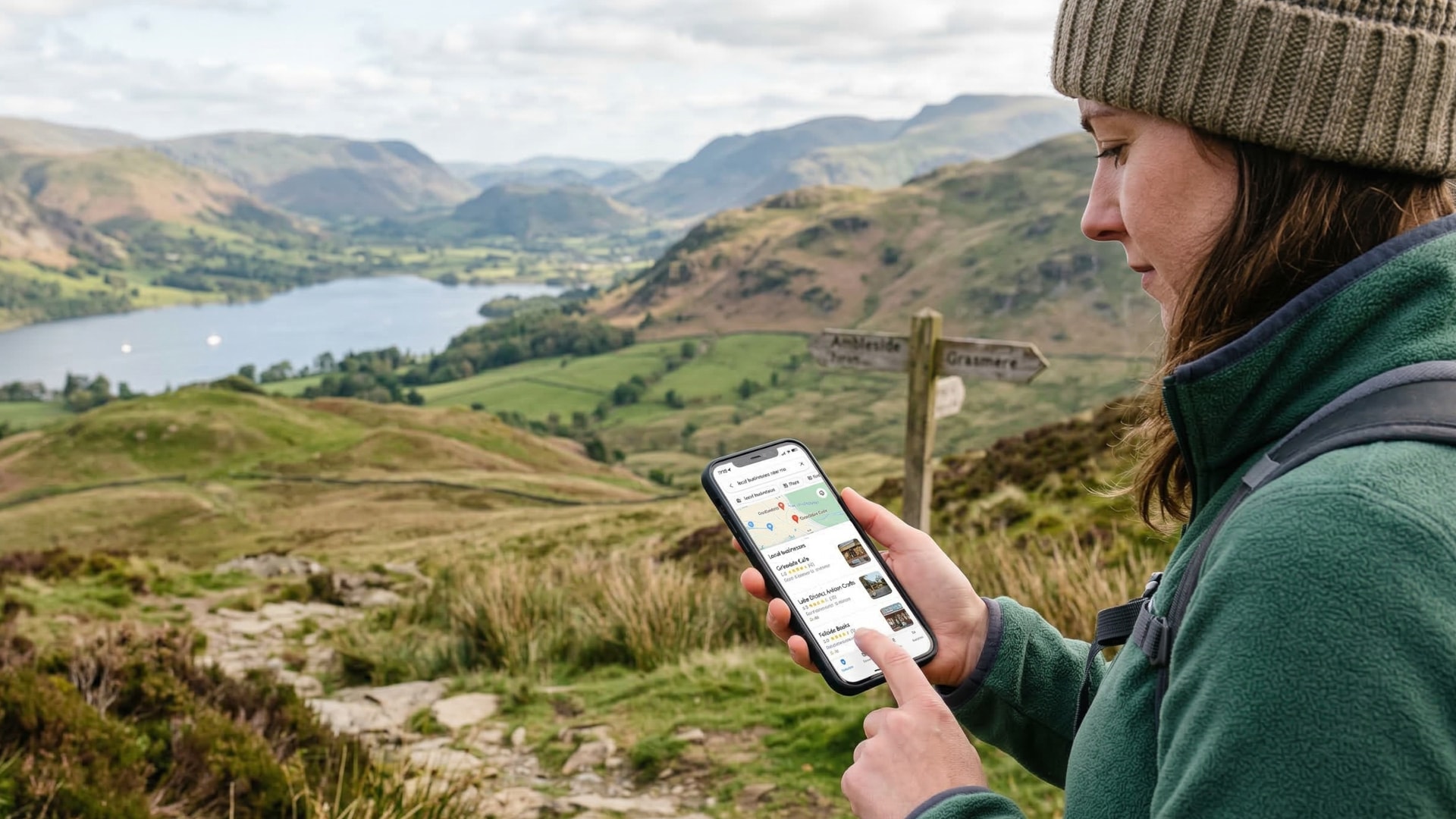
Designing mobile-first is not optional for any Cumbrian hospitality, retail, or tourism business. In practice, this means:
- Fast load times - optimised images, minimal script overhead, ideally sub-two-second loads on a 4G connection
- Clear primary action above the fold - book, call, or get directions visible without scrolling
- Touch-friendly layouts - buttons large enough to tap, no hover-only menus
- Simple navigation - three to five top-level items maximum, easy to return to home
- No broken forms - enquiry forms that are fiddly or non-functional on a small screen are a consistent conversion killer
What a Good Website Needs for a Cumbrian Small Business
Beyond local SEO and mobile fundamentals, a few things consistently separate Cumbrian business websites that perform well from those that do not.
Clear, direct contact options Your phone number and email should be immediately visible without any scrolling. For accommodation, restaurants, and activity providers, a booking form or booking system link should be equally prominent. Many businesses hide these behind multiple clicks when they should be front and centre.
Photography that reflects your actual place For tourism-facing businesses especially, genuine images of your location, team, and surroundings do more conversion work than any copy. Visitors are choosing between options and they want to feel certain before they book. Generic stock photography undermines trust; real images of your place build it.
Service pages that speak to local intent Rather than one generic "services" page, structure your site so that each main service or offering has its own page. This gives Google more to index and gives potential customers a clearer, more relevant landing point when they arrive from search.
A Google Business Profile that matches your website Your name, address, phone number, and website URL should be identical across your website and your GBP listing. Inconsistencies here - even small ones, like "St." versus "Street" - can suppress your local search visibility.
Common Mistakes We See from Cumbrian Businesses
Reviewing websites for local businesses is a regular part of what we do, and the same issues come up repeatedly.
No location context on service pages The website describes what the business does but never mentions where it operates. Google cannot confidently serve it for local searches. We covered the full diagnosis of this in why your local business isn't showing up on Google.
Outdated or thin content Pages that were written when the site launched and never updated, or pages with only a paragraph of text that give Google very little to assess for relevance.
Poor or missing photography For hospitality and tourism businesses especially, imagery is doing most of the conversion work. Blurry, poorly lit, or stock photos make a real difference to whether visitors feel confident enough to get in touch or book.
No content strategy For businesses in competitive local categories, having a handful of well-written articles covering topics your customers search for can make a meaningful difference to organic visibility over time. It does not need to be frequent - one or two quality posts per month is enough to build up a content library that supports your rankings.
Not tracking performance If you do not have Google Analytics and Google Search Console connected to your website, you have no way of knowing what is working and what is not. These are free tools and should be set up from day one.

Where to Start
If your website is underperforming, the best starting point is a basic audit: check whether your pages appear in Google for relevant local searches, look at your Google Analytics or Search Console data if you have them set up, and test your site on a mobile device as a potential customer would experience it.
From there, priorities become much clearer. Some businesses need a full redesign. Others need targeted technical fixes. Many simply need their content updated with proper location context and a Google Business Profile brought up to scratch.
Whatever the starting point, the principle is the same: your website should be working for your business consistently in the background, bringing in enquiries while you focus on the work itself. For Cumbrian small businesses, that means being visible in local search, performing well on mobile, and giving potential customers every reason to get in touch.
If you would like a fresh perspective on your website, we are happy to take a look. Get in touch, see how we approach web design in Cumbria, or browse our recent work to see how we build.
Related Posts

Get in touch - we're happy to chat.